Introduction

My name is Sally and I'm a final year law student in UCD.

I did debating throughout secondary school, and I suppose people perceive law as being the natural progression for annoying debater types, but honestly I had no idea what I wanted to do in college. Alternating combinations of English, Psychology, Politics and Film Studies fought for attention on my CAO form. Eventually, whilst studying history, I came to the somewhat badly thought-out conclusion that both Parnell and Isaac Butt had law degrees and had gone on to be of some importance, so I should do one too.


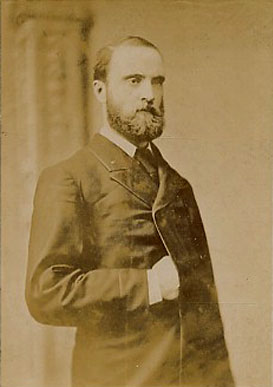
Parnell - what a guy!

I probably shouldn't mention this, but I put Trinity first on my CAO form. During the first week of starting college I got a letter telling me my Leaving Cert appeals had been successful, and I could jump ship if I wanted, but I had already fallen for the social life, the atmosphere and the lectures in UCD, and I don't regret my choice for a moment.

The law lecturers are fantastic. It's not unusual to hear one mention in class something they argued in the High Court last week, to see them as panelists on Prime Time or to read their views in the Irish Times. Many have written the leading text books in their fields, or have been published in international journals.

Last year I spent the year on exchange in Sydney, Australia, studying in the University of New South Wales. Students from my year went to Paris, Prague, Chicago, California, Amsterdam, Stockholm, Berlin  and numerous other locations across the globe.

Whether I go on to practice law or not, the degree has given me brilliant analytical, research and essay writing skills, along with a far more informed view of the world around me. The chance to travel and study abroad gives an international advantage, and the 150 clubs and societies on offer in UCD mean that your time here doesn't have to focus on just academics. With some of last years graduates heading off to Harvard, University of Chicago, to sit the New York Bar, study in London or to move into completely different fields altogether, you really can go anywhere from UCD law!

What is the Study of Law?

The first time I worked at UCD open day for the Law School was in second year. Excited to talk to potential students about my subjects, my classes and UCD’s opportunities, I knew I could tackle all their technical questions and calm their qualms. Until the first query flummoxed me...

“What is law?”

Reams of books by academics are devoted to answering this very question. Here’s the nifty google definition for you;

law/lô/
Noun:
1.      The system of rules that a particular country or community recognizes as regulating the actions of its members and may enforce by the...
2.      An individual rule as part of such a system.

However maybe the more pertinent question for you guys is what the study of law is.

What it ISN'T is just learning off statutes. The focus is on older cases, and how you can use them to help win new ones. Though written down, law is full of nuances and uncertainties, and the job of lawyers is to work out what the answer should be when faced with something that the statute doesn’t define.

Here are a few notable cases that I've studied so far in college. If you find them interesting or can find arguments for both sides you might just have the makings of a lawyer!

R v Dudley and Stevens 1884

Four men are stranded in a lifeboat after a shipwreck. These are Dudley and Stephens, along with the ship’s captain Brooks and the 17 year old cabin boy Parker. After 20 days, including several without any food or water, Dudley and Stephens proposed one person sacrifice himself in order to save the rest, and that they pull straws to decide who it was. A few days later, Parker had fallen into a coma, and seeing no rescue in sight and believing that Parker was close to death Dudley and Stephens decided to kill and eat him. Four days later they were rescued. Without killing Parker they would all have died in the meantime. Were they guilty of murder?


Re a Ward of Court 1995

After an accident at age 22 a patient is almost brain-dead but can be kept physically alive by the use of artificial feeding. She is kept this way for 23 years, cannot speak or move and has minimal recognition skills. The doctors want to withdraw the feeding tubes and let her die naturally but her family want to keep her alive indefinitely. Both sides think their way is in the best interests of the patient. What should the court decide?

Norris v AG 1983

David Norris argues that laws making homosexuality illegal violate his right to privacy. Is this true?


AG v X 1992

In the Irish Constitution both the right to life of a mother and the right to the life of an unborn child are protected, and thus abortion is illegal here. In this case a 14 year old girl, who was pregnant after being raped, claimed she would commit suicide if forced to give birth to the child. Should she be allowed have an abortion?

McD v L 2009

A gay man donates his sperm to a lesbian couple he was friends with so they can have a baby. Afterwards they fight and the women decide to move to Australia. Could the sperm donor make them stay in Ireland so he could see the child?

R v Burgess 1991

A man wounds a woman by hitting her with a video recorder while sleepwalking. Is he guilty of a crime?

Australasian Debating Championships in South Korea

At the end of my exchange in Sydney last year I was chosen to represent UNSW (my host university) at the Australasian Debating Championships in South Korea. My last month in Sydney was consumed by a rush of essays, packing and part-time jobs, and at the beginning of July 2011 I embarked on the 17 hour trip to Seoul.

The competition was one of the major highlights of my year (and that's saying something!). 120 teams from all over Asia, Australia and New Zealand were represented. Debating the leadership of the IMF with a team from Sri Lanka or Sharia law and asylum seekers with a team from Malaysia was absolutely eye-opening. Lunchtime discussions with present Iranians about their local politics or an Egyptian about his views on Mubarak whilst having my opinion sought on the Euro-zone crisis was really educationally enriching.

South Korea was an incredible country with the friendliest people one could imagine. Before I went I was told that if a public bus was running late the driver would get off and bow in apology, and they didn’t disappoint! The only downside was first day starvation as I grappled with the finer arts of chopstick eating.

I’m possibly the only Irish student to have ever debated in an Australasian Championship, something made possible by the UCD exchange programme.

If you have any more interest in Seoul, here’s an article I wrote last week for one of the two UCD student newspapers, the University Observer, about my Asian experience;


Asia’s Got Seoul

Sally Hayden is Seould on South Korea (and puns)

Shoeless and serene, we sit in front of a 15 foot high Golden Buddha. Hundreds of people rise and fall in front of us whilst emitting a constant indecipherable chant. This is BongEun Sa, an oasis tranquillity in the middle of one of the largest and most eclectic cities in the world.
The Yin-Yang symbol’s presence on the South Korean flag is absolutely apt. Seoul is a city of opposites. Samsung headquarters neighbour an ancient palace, the raucous bustling streets give way to the quietness of a Buddhist temple, and on the radio traditional Korean bamboo flute music is interjected with K-pop, the nation’s more modern creation.
This is a country to forget Western superiority pretentions, and accept that English is not always the language of favour. Do carry around a card in Korean with the address of where you are staying. Do go into a restaurant, pick a symbol off the menu and hope it’s not the braised silkworms. Don’t be the tourist who thinks that the louder your voice the more likely you are to be understood.
Spend a day (or night) in Namdaemun market, a tented metropolis of clothes, home ware and electronics. This 24 hour conurbation never rests, and when lost under fluorescent lighting in one of the adjoining vast jewellery workshops, 4am and 4pm are interchangeable.
If air-conditioning is more your style, Lotte World is a shopping centre empire. Inside this indescribably vast construction, you will find such shopping-centre essentials as an ice-rink, several rollercoasters, and the building’s own custom built island. Most memorably, and serving as a reminder that SK health and safety legislation may not be quite as stringent as our home version, the basement also boasts a shooting range. Walk in, show ID, pick the rifle of your choice, and fire ten bullets at a paper target, all for less than €25!
Foodwise, Korean cuisine is delicious, but perhaps not appealing to the Western palate before 9am. Avoid the sushi and grilled fish breakfast, but treat yourself to shared hot-pots for lunch and Korean barbeque for dinner. Chopsticks are unavoidable, Kim-chi (fermented cabbage) is served with almost every meal, and it is rude to pour yourself a drink.
A few hours at the Korean War Memorial serves as a reminder of the world’s most secretive nation, the South’s lost half, just 100 miles away. National pride and the echoes of a war not yet won emanate from all aspects of the exhibition, which features drawings by the South’s school children on the theme of conflict and reconciliation. Google map North Korea and your screen will display a blank. Still curious? Spend €50 on a day trip to the Demilitarised Zone (DMZ), stare across the void and try and fill in the gaps for yourself.
Apart from an occasional kidnapping (the last was in 2000), in Seoul you could be forgiven for forgetting the war ever happened. With Soju (tastes like watered down vodka) for 1000 won a bottle (that’s 80c to you and me) and a huge student population, head to Hongdae if you’re keen to sample Seoul’s nightlife. Just be sure to make it clear you’re not American. The US military have been a regular presence since 1950, and have made some local enemies, not because of their politics but for their drunken bad behaviour.
Seoul is a city where barber shop poles signify brothels, Starcraft is revered as a sport and a bus driver will bow to you in apology if the bus is late. The women-only university Ewha champions gender equality, producing Korea’s first female judges, politicians and leaders, yet wishes visitors luck finding a good husband. Starbucks is open all night, arguing is barely socially acceptable and street fashion is on a par with Tokyo.
Back outside the temple, our meditation in the humid heat is disturbed by a sudden downpour of rain. Ying-yang; an Asian philosophy of complementary opposites. Even the weather understands.
            

UCD Clubs and Societies

Some of the advice you’ll be besieged with daily during your early days of college will involve clubs and societies. The recurring mantra “Get involved!” will ring in your ears. Well older college students aren’t one bit like your parents. When they give you counsel you should make sure you take heed and listen!

UCD has over 150 sports clubs and 100 societies. These range from the small to the large to the VERY large (the L&H has 5000 members).

Ryan Tubridy speaking at a comedy debate in UCD

In the last few years I’ve been an occasional participant in this society life. Soup runs with St. Vincent DePaul have meant that instead of sitting in half-heartedly watching the X-Factor I’ve spent many Sunday nights giving soup and sandwiches to the homeless of Dublin. Involvement with the L&H has helped me attend debating competitions (for free) in Galway, Cork, Maynooth and London. The L&H and Lawsoc have also enabled me to see firsthand guests like Tony Hawk, the Janitor from Scrubs, Alan Rickman (Snape from Harry Potter) and Noam Chomsky.

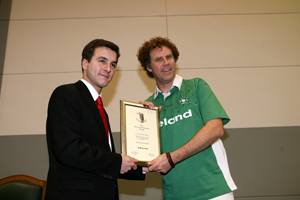
Will Ferrell with L&H Auditor Michael McGrath in UCD

In first year I played for one of the UCD Hockey Teams, which was a great way to interact with other sports enthusiasts from across the college. I also had a brief stint on the UCD dodgeball team (unsurprisingly this one ended with bruises).

Writing for the University Observer has seen me interview bands like Kasabian, Hockey, Republic of Loose (twice), Delorentos and Ash along with Bill Bailey, Mr Scruff, and various others. This led to me being offered an internship in the Santa Barbara Independent during the summer after second year.

Bill Bailey being presented with the James Joyce Award by the L&H in UCD

Sports in UCD extend beyond the usual to trampolining, squash and the rifle club among others. If you don’t discover a society that appeals to you then you can set up your own!


The trampolines are REALLY big

Remember when you come to college that if you’re enthusiastic the opportunities are endless. And this is true too in terms of the amount of people you can meet. At the start of the year all clubs and societies will set up stands and you pay just €2 to join (and get lots of free stuff). Don’t be intimidated, a year or two ago those who are now running the whole show were in your first-year shoes. Get involved (and reap the benefits).

Full list of UCD student societies: http://www.ucd.ie/socs.htm
Full list of UCD student sports clubs: http://www.ucd.ie/sport/

Electives

One of the benefits of UCD is the Horizons option. It was controversial when it was introduced, through fears it would dilute the strength of our degrees, but I think it has proven invaluable to achieving a more rounded education.

In the US, all undergraduates are required to complete modules in various fields outside of their own, such as arts, literature, physical science and international studies, regardless of their major.


One of my friends in America was required to take jogging as a class! (Though if it looked like this I think I'd be happy to too).

Though not quite extending that far, the UCD system now allows students to choose to study one module per semester in any area or school of the college as part of their degree. This means that a student can re-examine something they had forgotten from school in more depth, like French or history, or try out something completely new, like computer programming or introductory economics. The result is a better-rounded student, one that has designed a degree to suit themselves, and has either maintained skills or perhaps inspected a new area for future study. Furthermore if no other options interest them, a student can choose to take an extra subject directly in their field, therefore increasing their depth of knowledge in their particular subject area.

During my time at UCD I have gained credits for participation in the UCD Symphony Orchestra, taken classes on Issues in World Development and am currently learning about Middle Eastern Politics along with my focus on law. Friends of mine have kept up studies in German, tried out Japanese, or even taken the physiotherapy module Intro to Massage (NB: this one is more difficult than it sounds!)


Volunteering at Home and Abroad through UCD

One of the opportunities you can avail of during your time at UCD is to go abroad for a summer and volunteer in a developing country. I recently wrote an article on this for one of UCD’s student newspapers, the University Observer. The people I met while writing it were genuinely incredibly nice, and really seem to be achieving a lot in the countries they’re working in (which include India, Haiti, Tanzania and Nicaragua).  Any student of any subject can get involved. Check out http://www.ucdvo.org/

Besides this, if you’re more of the charity starts at home persuasion, UCD St. Vincent DePaul run a lot of programmes like homework and youth clubs, visitations, flat decorating and soup runs six days a week. Check them out at  http://www.ucdsvp.com/

University is all about expanding your view and experience of the world, and volunteering is one way to test your limits whilst learning a lot about yourself and others. 

Here's the article I wrote:


Half a World Away

Sally Hayden examines who really benefits from the growing trend of volunteering abroad.

At some stage even the most hardhearted amongst us feel the urge to better the world we live in. While societies such as St. Vincent DePaul offer opportunities to volunteer in Dublin on a regular basis, more and more students are feeling the pull of transferring their goodwill overseas. Sun, sea and service can appear to be a winning combination for an alternative summer.
Each year droves of unskilled idealistic students head from the West to the developing world for between two weeks and two months. Tour operators have recognised growing demand for the feel-good factor, and ‘voluntourism’ trips, combining sightseeing with charity work, are becoming much more prevalent. Cynics call it ‘poverty tourism’. Building houses or teaching in orphanages can certainly feel very rewarding, but is such a short period of time long enough to make this much revered ‘difference’, or are we simply adding to existing problems?
UCD Volunteer Overseas’ auditor Sinead Hughes recognises that there are positives and negatives to having such a limited time abroad. “I think short-term volunteering is more intense. You get a lot more done in a short time, I think if you were there for longer it would be more relaxed so in that way it's good to go out and be efficient with your time. But then I guess if it's a case where you're going into a country for four weeks and then not coming back then it has negative effects on the whole community, but with VO I think the way we're coming back year after year has a positive aspect.”
View Summer Ca...JPG in slide show
After working in a Delhi centre for children the summer before last, third year medical student Rachel Rynne-Lyons admits she did consider whether it was unreasonable to become close to the children there only to leave them again. “I thought was it fair? But I think a lot of the places that VO sends people to have a continuous system of volunteers and they're used to it, and it's really exciting for them because they get to meet new people, and new things to teach. We're such a different culture and I think we try to be really caring with kids, I think it's just natural instinct, to girls especially, and then to become really close to the kids and then leave isn't fair but I think it's good for both of us to have, to make a connection even if it's just for a month. You see that they do have someone all the time. And also the kids are really clever and as much as you think that you've made them fall in love with you they're very smart kids and they kind of know how to win everybody over, they're really cute.”
During their course of studies at UCD approximately 25% of students undertake a course in some area of development, a statistic that demonstrates a legitimate and commendable interest in the field. However Dr Patrick Walsh of the UCD Development Studies Department sees volunteering overseas as somewhat an extension of this education, more of a benefit to the student who embarks on it than to the locals that are their target, though undoubtedly it is a hard won reward. “I think it is what it is, to give relatively privileged students in Ireland the chance to see firsthand the conditions people have to live. It's an important thing for people to see. When we're giving money to students to do that I think we are understanding that this is for the development of the UCD student. It's not just about having an impact in Africa, it's also about the education of the UCD student to have a more global mind. You could have views on a person's trade and whether aid works in a big macro sense but this is not about that, this is just about UCD students broadening their horizons. I think you're looking at a different return to the money.”
Walsh believes that if small projects are undertaken and tackled effectively these can be far more useful than trying to surmount grand tasks. “Obviously the volunteer work is very community based, it can be very so-so, but they've done clever things. (UCDVO) brought second-hand computers, they fixed them, they've shipped them into Tanzania, they brought them up to Eritrea. They have the skills. These are probably relatively small projects but they do them very effectively.”
Foreign aid has arguably caused more harm than good in many regions, when benefactors fail to properly research the local economy and examine the knock-on effects of their efforts. There are arguments with a sound basis that suggest that free volunteer work can lead to local unemployment, or free food to an exaggerated inflation of local farmer’s prices, and thus result in far-reaching negative impacts for the local community. Walsh notes that you also need to be aware that with aid you’re setting the agenda on spending rather than letting locals or a government do it themselves. “You're enforcing a curriculum, a kind of value setting in the way you do things”.
Walsh says that avoiding negative consequences can be best done by keeping your aims measurable and targeting those who need it most. “In general, if you go to an area that is the poorest of the poor and they genuinely have nothing. Nobody's coming to build the road, nobody's coming to fix the hospital, it's more about going inside a community where you do this little job. It's like going to an old person's home, and you fix the shower or you fix the gate for them. It was not going to be done by someone else. And I think once the project is careful that you're not displacing people, that you're doing something that was otherwise not going to be done then I think it's ok. Any development project or any intervention you should be very careful that you're not causing unintended bad outcomes. You should test yourself against these kind of questions.” 
View South Afr...JPG in slide show
Auditor of the UCD World Aid Society James Mac Mahon reiterates the need to take care when picking your project. “You can’t blame someone for being optimistic and wanting to help, but people need to know where they can apply themselves and where they are needed” The World Aid Society is a well known supporter of fair trade, and are also currently in the foundation stages of their own alternative travelling scheme, an exchange option with Africa. Aeshi University in Ghana encourages African graduates to remain in Africa, an anti-brain drain that is vital for sustainable development. “It’s encouraging Africa from the inside and promoting things like the middle class, and working it up, helping establish companies and businesses.” Bringing their students to UCD for a term could be very empowering, giving them experiences and skills that they could use later to enhance their own region, whilst UCD students attending Aeshi could likewise learn a great deal from their African counterparts.
Changing attitudes and enhanced understanding is something that is essential for global interaction and sustainable development. Hughes points out that in the long term a student can be suitably moved to dedicate further time or even their profession on improving the areas they’ve witnessed. “There are so many of our past volunteers who have focused their career on it which greatly benefits that country. That's really positive. And as well sending the money across could create a dependency that you don't want to create in the country. If you just feed money into them, when you stop what happens then?”
UCDVO holds information evenings annually, encouraging applications and holding interviews to guarantee they have the best teams possible. Eagerness, diversity and skills are all components that can secure you a place on a future project. As Hughes says, “Things like enthusiasm, people who can work on their own initiative. Obviously people who have done construction or teaching before would be a benefit, or if they've got languages, exposure to working in hard conditions. But I think the main thing is to get a diverse group from different schools and characters and things.”
Haranguing family and friends for money is also an issue that many students are hesitant about. A lot of providers will charge often inflated prices, with no encouragement or suggestions to aid potential volunteers. However, with UCDVO there is a lot of support in place. “They have to raise €2500 and there's the student committee that provides support for them so I think it's daunting at the start, but once you get going it's fine. People do bag packs, we have Rás UCD, we did the Wicklow 200 cycle and got sponsorship for that, so there are a lot of generic events that they can latch onto, and then they can do their own things as well so it's very doable. Most people reach beyond their targets.”
All volunteers recount a similar tale of a new insight and understanding of the plight of others. Rynne-Lyons’ experience taught her to focus on a more global picture. “It sounds a bit ridiculous but you become a bit more realistic about things you would have usually worried about when you come home. It puts things into perspective a little bit more” This sentiment is echoed by Hughes. “I think on a personal level it teaches you a lot about yourself. How to deal in situations that push you outside your boundaries, and you appreciate everything once you come home.”
Though it is noble and commendable to want to change the world you live in, opportunities to volunteer abroad should always be tested for unintended harms. Sustainable projects that operate on a manageable scale without displacing locals should be focused on, and one should always be aware of keeping their agenda in line with what is best for the locality. Meanwhile a willingness to learn as much as you teach will ensure that you gain the best personal return on your investment, and realise that the difference you aim to champion will be as much to do with yourself as with anyone else.
Six Things School Students Don't Realise About College

1. Hours: With some courses (like law) you only have about 12 hours of lectures a week. With only two or three hours a day this can be strange to get used to, and result in a lot of daytime TV and hanging around before you realise that the rest is supposed to be scheduled library time!

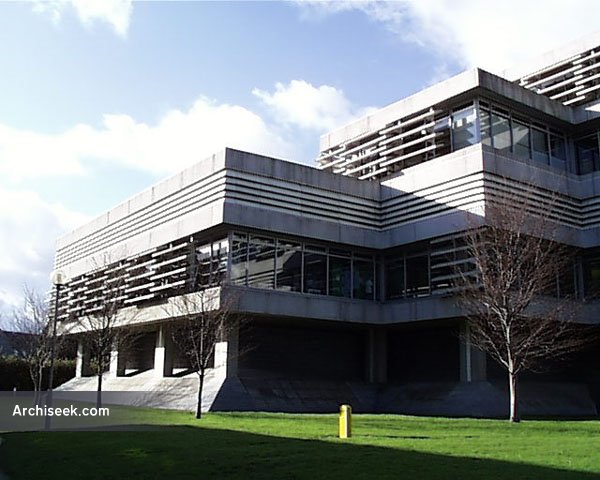
The James Joyce library is one of four in UCD.

2. Rules: I always get people coming on tours asking me what the rules are in college and whether my teachers are strict. But the truth is that college isn't like school at all. Lecturers really don’t care if you don’t turn up to their classes. Nobody’s going to hunt you down for bad behaviour. However you will notice poor attendance in your exam grades.

3. Lecture Sizes: Some lectures can have up to 500 people in them. Imagine your entire secondary school in the one lecture hall... However lots of subjects will have tutorials too, which are a lot more useful for getting to know people and discussing the subject.

UCD's biggest theatre, Theatre L in the Arts Block, holds 500 students. 

4. A degree DOESN'T define the rest of your life: Most final year students are just like you guys, they have no idea what they want to do with the rest of their lives! What you choose to do or what you miss the points for isn’t conclusive. I have a friend who did a law degree and is now on her way to be a doctor. Pat Kenny did a chemical engineering degree in UCD!
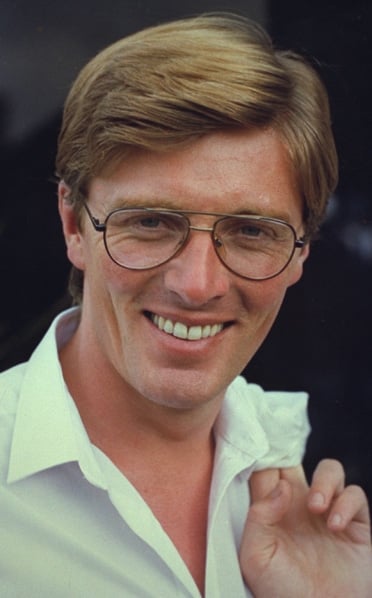
Pat Kenny in his younger days

On that point, if you want to go into law as a career you can do that with any degree at all. It just takes an extra bit of time after you graduate from another subject, so don’t give up on your dreams if you try for law but don’t get it.

5. Welcome to the technological age. We use computers a lot. In fact for a business degree it's mandatory for you to have one. UCD has wireless all over campus and a lot of your notes will be posted online so that you don’t have to write everything down in your lectures. A lot of the library resources are also available in digital copies that you can download.


While they were still on the X-Factor, Jedward came back to film on the UCD running track. Within a few minutes hundreds of students had gathered... the word had been spread on Facebook!

6. UCD is big, but it's manageable. Don't worry about being overwhelmed. After your first few weeks you will stop getting lost. You will meet people in tutorials, or through clubs and societies. You will reach the stage where you pass friendly faces regularly and start to feel at home as long as you make some sort of an effort. College will undoubtedly end up being the most social time of your life. Don't worry!

Extra-Curricular Legal Activities

UCD provides lots of opportunities to flex your legal muscles before you reach professionalism. I’m sure I've missed lots, but here are a few examples.

Student Legal Service: UCD SLS runs free legal aid clinics for the general student masses of UCD, manned by the law students. You’ll get a crash course in employment and housing law, and anything else that might be relevant, and then will give over your legal skills to the needy a few times a semester. This is really good for teaching you to manage real legal situations where your advice is sought.  http://www.facebook.com/ucdstudentlegalservice

UCD Law Review: This is a student-run journal that publishes academic articles written by students. One can apply to be on the editorial board, or submit an article for possible publication. The 11th Issue was launched last month by Chief Justice Mrs. Susan Denham. Participation in Law Review is something that is especially appreciated by American firms and colleges. Applications from students from all years are sought annually. http://www.ucdlawreview.org/

I'm sure Judge Judy would approve.

Mooting: Imagine a mock trial in teams of two. In the UCD moot court competition you prepare a case and present it in front of a real barrister or solicitor acting as judge. The UCD winners go on and compete against other colleges for the national title. There are also options to compete in inter-college competitions on weekends throughout the year. This is brilliant, both for a CV and to develop your research and speaking skills.

Law Day Committee: Law Day is an annual festival of all that is law coupled with raising money for charity. Being involved with organising it means that not only do you get to suggest fun activities, but you also get a special organiser t-shirt! Result!

Going on Exchange (Aussie Aussie Aussie)

UCD Law offers you the option of going abroad for your third year. I would recommend this to absolutely everyone. Though the prospect of going away for so long seems terrifying, you learn so much about yourself and the world, as well as gaining invaluable memories. The chance to study in another country is so much better than just travelling.

For my exchange I wanted to go somewhere English speaking. My options were America, Canada, New Zealand and Australia. I chose the last option for the slightly ill-informed reason that the weather was good, the people seemed nice and if I was going to go away for a year why not make it the other side of the globe.

Well the people were nice, but at first the weather was dire. July, when I arrived, is winter in Aus, and surprisingly it does actually get cold. However the college was fantastic and allowed me to try out a completely different kind of teaching to UCD. New subjects, lecturers with strange accents and a whole new set of ideas is one aspect of the exchange experience that is invaluable.

University of New South Wales, my college in Sydney

Besides that, I met people from across the world. I travelled New Zealand with friends from Canada, Germany, South Korea and the USA. I learnt Spanish from my Chilean friends, the rules of cricket from the Indian and English and for our turn my UCD compadres and I cooked an Irish breakfast on St. Patrick’s Day for all of them.

As the holder of a student visa I also got to work and travel all over Australia, and have included some photos below. The weather did heat up in the end (a summer high of 42 degrees) and I even tried my hand at surfing!

UCD Law offers the chance to go on Erasmus to countries all over Europe including France, Germany, the Czech Republic and Sweden, as well as internationally to Canada, Australia, Singapore, America and New Zealand.


In order these are; Circular Quay in Sydney, the Sydney Opera House during the Youtube Symphony Orchestra, sunset in Airlie Beach in Queensland, the Twelve Apostles on the Great Ocean Road in Victoria and beaches and The Pinnacles Desert in Western Australia.

UCD Students Union/Ents

The UCD Students Union is a group of elected individuals who aim to represent and address the views of students on campus. They exist to aid you with any problems you might have, whether on a personal level with your class, courses or money issues, or on a larger scale by lobbying and campaigning for students’ interests on a national level.

Elected Students' Union Sabbatical Officers 2010/11 - in charge of welfare, education, campaigns and communications and entertainment. For some reason it is usually pretty male dominated, but in a step forward there is a female on the team this year!

However one of the best functions of the Student’s Union is in providing onsite entertainment. The class rep system tries to ensure there is an individual in every class responsible for organising class parties, trips and general community activities. Meanwhile, the Ents Officer arranges everything from comedy gigs and student nights out to a Fresher’s ball (this year featuring Lil John), and the infamous UCD Ball (featuring 8,000 students).

UCD Ball 2009

During the year they organise gigs in the student bar. Last week LMFAO played. Other previous attendees include Digitalism, Boyz Noise, Calvin Harris and the Vengaboys.
For those living on campus there are also nights out and alternative activities like football tournaments organised. 


                                          The Vengaboys performing in the UCD Student Bar

                                          The Blizzards in UCD

Here’s their website: www.ucdsu.com

Part-time Jobs

College can be expensive, especially when you factor in a social life. Lots of students work all the way through their years here. As long as you can manage your time reasonably well there’s no reason to give up your job.

And if you don’t have one, don’t worry yet. There are lots of chances to get employment on campus as well as off. The Student Union shops hire students. There are chances to get research positions during the summer, get paid for typing up notes in your classes for disabled students (yes, you get paid to attend your classes and take notes!) and there’s a UCD alumni telephone fund that takes on students too.

In first year I worked in the UCD Student Bar. It was absolutely brilliant. Not only could I easily get to work, but as the hub of student activity, I also got to know a lot of people and got free into all the gigs. Originally I found it difficult to manage my time between tutorials and the job, but once you get used to it and learn to anticipate what work you might have coming up, you’ll be fine.

UCD Student Bar - way more exciting inside than out!

Besides my job in the Student Bar, during my college years I’ve worked as a barista and front-of-house in the Grand Canal Theatre, as a receptionist in an office in the city, as a promoter for Bulmers Light and Flahavan’s Porridge (this involved me wearing a Formula One suit... not my finest hour!) and as a script delivery assistant in Fair City.

Another way to raise money is to work and save during the summer. And if you’re stuck there are other forms of help available too. The Student Union’s Welfare Fund exists to help out students facing financial difficulties, and the St Vincent de Paul have a fund set up too. Times are certainly very difficult at the moment, but don’t let a lack of cash get in the way of attending college.

Peer Mentoring

Before you start classes at UCD you’ll attend an orientation week on campus. Fresh-faced from your post Leaving Cert junket to Ayia Napa (well that’s where my little sister’s going), you’ll arrive tanned, confident, and ready for anything.


LOL JOKE.

When most first years arrive at UCD they’re terrified. Yes college is exciting, yes it’s brilliant to be done with school, but starting all over again is always going to be difficult. This is magnified times a thousand if you don’t come from Dublin, or don’t know anyone who’ll be attending your course or even your university.

This is where peer mentors come in. On your first day your year will be split into small groups and assigned to one. Generally a second year (that’s only one year ahead of you), they were in your position a year ago, and know exactly what you’re going through. They’ll bring you on a tour of campus, answer all your questions, and give you their numbers in case you ever get lost and need a saviour.

And even more importantly, because you’re in small groups it’s much easier to get to know each other. Some of the people I met on my first day at UCD are still my closest friends. Others aren’t, but we swapped numbers and I called them if I was confused about an exam question, missed a class or needed help finding library books.

When I got a chance to be the mentor in second year I was delighted, and found it very strange the way the first years seemed to think I had all the answers, when a year before I had been in their little fresher shoes.


I googled "fresher shoes" and for some reason these came up. I figured I'd just go with it!

A Week in the Life of a Law Student

In my opinion, there is no such thing as a typical week in UCD. College is what you make of it, and there’s always something going on. We’re getting closer to our first set of exams for the year now, and there are only a few weeks to go, so seriously getting the head down. Having said that I seem to rack up an indecent amount of other commitments along the way.

Monday

10am – Phone interview with novelist Colm Toibin for the University Observer. He was really, really lovely. Quote of the interview; “Every morning I get down on my knees and thank God I didn’t go to Trinity!” He also says he’ll never run for president of Ireland because it would involve him having to attend the National Ploughing Championships.

11-1pm – Matrimonial Law. In fourth year we have a lot more freedom with what we study, and I could choose all my topics myself. Matrimonial law is the study of marriage and divorce, and so far is pretty interesting. The most controversial topic of the semester... given gay marriage is illegal in Ireland, if transsexuals have a sex change, should they be allowed marry someone of their old sex?

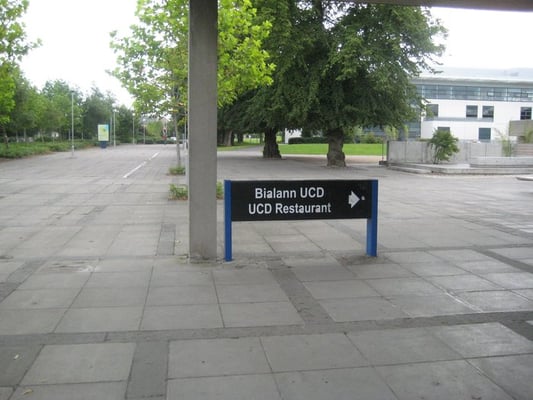
1pm – Lunch in the Restaurant. Soup and a roll for €1.85


2pm – 11pm (hopefully!) Study in the library

Tuesday

10-11am Middle Eastern Politics. This is my elective class and so far is pretty interesting, especially given how topical it is at the moment.

11-1pm Lunch/library

1-2pm Jurisprudence. The philosophy of law. Most exciting topic this semester... was law under the Nazis really law?

2-4pm Equity – this is definitely my most difficult class. Luckily you don’t have to do it until final year, but it is a requirement for entry into King’s Inns, and I’d rather not restrict my opportunities so I figured I’d cover it. It’s all about fairness and the question of what is real justice and worthy things like that.

7pm Law Review meeting. Law Review is a student run journal that publishes articles written by students. I applied to be on the editorial board this year and have heard it’s a lot of work but very still rewarding. This is the first meeting of the year but I think it's just general introductions. The real work won't start until next semester!

9pm The Ides of March - Something I haven't mentioned as a benefit of being a student yet is your student discount. Tickets to the cinema are going to come to about €4.50 each, half the usual cost! In hounour of cheapness (but not related to it) I am going to include a photo of Ryan Gosling.


Wednesday

I have Admin Law from 11am-1pm and then it’s to the library again. Sometimes it’s so difficult to motivate yourself to stay in late, but as places to study go UCD is pretty good. I always get much more done here than I do at home (p.s. yes I am typing this from the library!)

Thursday

10-11am Middle Eastern Politics. This week a guest lecturer is in to talk to us which should be good. Some lectures are only taught by guest lecturers, a different one every week which can be interesting or not so interesting depending on who they are.

After this it's... to the library again of course! With exams just two weeks away it's really crunch time.

Friday

11-1pm Evidence. This is the real law and order class. We study fingerprinting, line-ups, cross-examining witnesses... CSI eat your heart out!

2-3 Jurisprudence

3pm - Human Rights Advocacy Group. This is a project that was just set up this year by some of the law students in UCD. They’re trying to find a practical use for their law skills, currently targeting human rights abuses in the Phillipines. At the moment we’re focussing on sending letters and emails. This week I wrote to the Justice Department Undersecretary in the country about an issue that we’re looking into.

One of the areas we're focusing on is the mistreatment of street children

7pm – Debating in the quarter final of the Irish Times Debating Championship in DCU which I’m entered in with UCD’s L&H. The 11 goes straight from UCD to DCU so getting there should be fine. The motion is “That This House Believes that if Josef Mengele had discovered a cure for cancer, it’d be morally acceptable to use it.” If anyone has any ideas for proposing that, do leave a comment!

Student Summers

Don’t let the phrase “youth is wasted on the young” apply to you. UCD is beyond brilliant, but one of the most incredible times in a student’s life is the summer, and a student’s summer involves many options that you’ll never get again! Throughout the year you'll see posters and demonstrations about different options to look into. Here are a few;

Au-pairing
If you’re studying a language, this one’s for you! Think accommodation and a bit of pocket money in exchange for some babysitting and housework. Lots of students do this in Europe to improve their spoken languages. The amount of work you get does vary per family, so it’s worth putting a bit of research into this beforehand.

Work at a Holiday Camp
At holiday camps, fluent English speakers are in high demand. You could end up minding kids, organising activities or taking people on tours, but for a bit of included pay and a lot of sun there are certainly worse ways you could spend your summer! I know a few people who did this in Greece and Spain.


Working at Home
Ah the dreaded summer in Ireland. If you’re lucky enough to get a job at home and can save up a bit of money, there are a few destinations that remain popular with students year in and year out. Greece (think Mama Mia), Thailand (make sure you get the vaccinations!), and Inter-railing (Eastern Europe is much cheaper and still amazing) are all pretty good options.


With meals from €3 and a night in a hostel from €8, Estonia is definitely to be considered.

J1

If you’re enrolled in a full-time college course in Ireland you can get your hands on this four month visa that entitles you to live and work in America for a summer. Think California, Washington DC, Boston or Chicago. Think sun, sea and lots of Lucky Charms. Think a weekend away in Vegas.

I went on a J1 to Santa Barbara the summer after second year, and not only did I have an amazing time, but I got some brilliant experience. Eight friends and I lived together in one tiny apartment. I also worked as a reporter for the Santa Barbara Independent and as an intern in the Nuclear Age Peace Foundation, which were opportunities the equivalent of which I can’t imagine I would have found in Ireland. That summer saw me taking notes on murder trials, brainstorming ideas for the launch of the film “Countdown to Zero”, cycling across the Golden Gate Bridge and fitting in lots of beach time!


Look closely at the last photo and you can almost see how close we got to Bruce Willis in Los Angeles!

Definitely five stars *****